Category: USA

  • ‘Scientist-as-a-Service’: Seattle startup Pauling.AI aims to shrink drug discovery timelines by months

    ‘Scientist-as-a-Service’: Seattle startup Pauling.AI aims to shrink drug discovery timelines by months

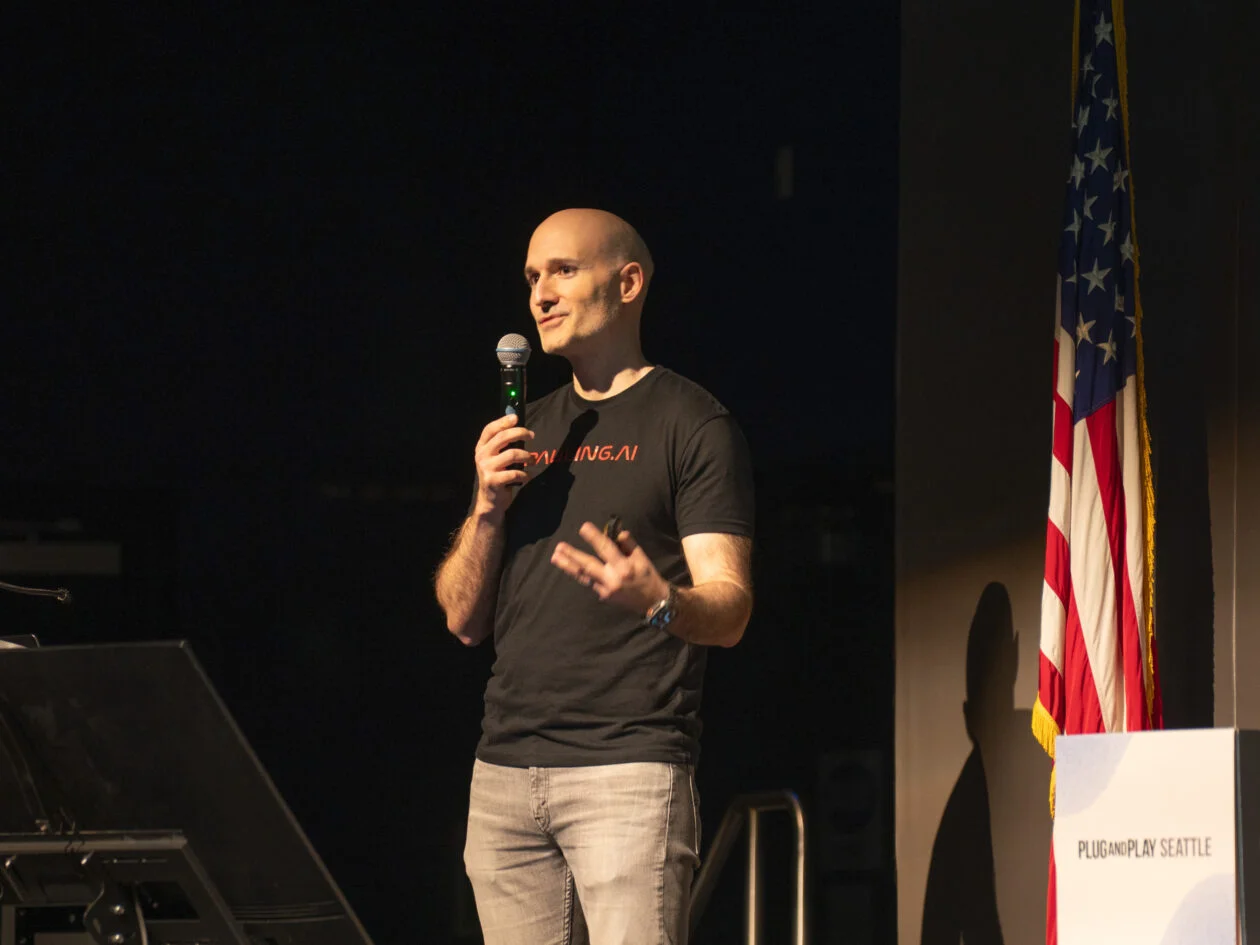
    A Seattle-area startup called Pauling.AI is harnessing artificial intelligence to automate the early steps that lead to the discovery of new drugs. The technology can complete tasks in a matter of weeks that previously required three to six months, said founder and CEO Javier Tordable.

    Using AI to accelerate research timelines could ultimately spark an exponential increase in new treatments, proponents say.

    “The dream of a lot of people in the field would be that, at some point, we’ll go from 30 or 40 new drugs approved every year to 300 or 400,” Tordable said, “and cure all sorts of diseases.”

    Tordable launched his company in 2024 after a 16-year tenure at Google, most recently as the technical director of the company’s healthcare and life sciences initiatives. While he doesn’t have expertise in biology or chemistry, Tordable said he’s skilled at building tech tools that can perform complex tasks — such as those required to create new pharmaceuticals.

    The startup operates on a “scientist-as-a-service” model, allowing researchers to outsource early steps in the drug discovery process to AI. The platform performs computational chemistry work, engineering drug candidates and modeling how they might interact with molecules and inhibitors within a cell.

    The result is a curated list of small-molecule compounds that scientists can then move into a physical laboratory for testing as therapeutics. In the future, the startup would like to produce more complex compounds as drug candidates, such as antibodies.

    To accomplish all of this, Pauling is building automation tools that engage with existing large language models and databases from numerous sources.

    The startup has six employees who work remotely. Its leadership includes Chief Scientific Officer Oleksandr Savytskyi, a computational biologist who worked in academia in Ukraine and did research at the Mayo Clinic.

    Pauling has secured an undisclosed amount of pre-seed funding from Flex Capital and angel investors. It currently serves less than a dozen customers, including several high-profile academic institutions, Tordable said.

    The company joins a burgeoning field of AI-biotech ventures, with numerous Pacific Northwest startups: Variational AI in Vancouver, B.C.; Seattle-based Potato and Synthesize Bio; and Xaira Therapeutics, which is based in San Francisco and has labs in Seattle. Additionally, FutureHouse is a California nonprofit in this sphere.

    Ultimately, Tordable hopes that by shrinking the time and cost of drug development, it will become economically feasible to tackle rare diseases that are typically not served by big pharma, providing overlooked patients with treatments and cures.

    “The nice thing of working in this field is that we’re not necessarily doing it just for economic returns,” Tordable said. “There’s also an enormous benefit to humanity.”

  • Tech Moves: Nintex CEO to depart; Raikes Foundation names leader; Qualtrics exec now at Workday

    Tech Moves: Nintex CEO to depart; Raikes Foundation names leader; Qualtrics exec now at Workday

    — Nintex CEO Amit Mathradas announced that he’s leaving to take the helm of Five9 beginning on Feb. 2. Mathradas has led Nintex, a Bellevue, Wash.-based workflow automation company, for nearly three years. His previous roles include chief operating officer at Avalara, general manager at PayPal, and a 14-year run at Dell.

    Five9 is a California-based software company specializing in AI-powered customer experience solutions.

    “It is an honor to join such a dynamic company that I have long admired as being at the cutting edge of AI-driven CX,” Mathradas said on LinkedIn.

    Zoë Stemm-Calderon. (WRF Photo)

    — Starting Jan. 1, Zoë Stemm-Calderon will take the role of executive director at the Raikes Foundation, where she has worked for a decade. She is transitioning from her current position as senior director of Youth Serving Systems.

    During her tenure, Stemm-Calderon has managed yearly investments of $20 million directed toward initiatives focused on K-12 and higher education, along with youth homelessness programs.

    Jeff and Tricia Raikes are the co-founders of the foundation, which launched in 2002. Jeff Raikes was at Microsoft for close to three decades and served as CEO of the Gates Foundation for more than five years. Tricia Raikes is co-founder of Giving Compass.

    Emily Heffter. (LinkedIn Photo)

    — Emily Heffter is now senior director of thought leadership and research for Workday, a finance and HR software company with offices in Seattle. Heffter joins the company from Qualtrics, where she was vice president of global communications. She was previously Zillow Group’s director of corporate communications.

    “I’m joining Workday’s amazing communications team to help tell one of the most dynamic stories in the business world: the future of work.” Heffter said on LinkedIn. That includes “how people, technology, and leadership are evolving together — and helping business leaders see around the corner.”

    Lance Ludman. (LinkedIn Photo)

    — Seattle’s Lance Ludman has joined SurveyMonkey as its new chief financial officer. Ludman was most recently CFO at the social impact company Benevity. He also served as CFO at DreamBox Learning, a Bellevue, Wash.-based edtech company that was acquired in 2023.

    SurveyMonkey CEO Eric Johnson praised Ludman’s “unique leadership style,” adding in a statement that “he maintains a persistent curiosity and business-partnership mindset.”

    — Seattle-area rocket company Stoke Space appointed Matt White to its board of directors. White is executive vice president and CFO for Linde and serves on the board as a representative for Industrious Ventures.

    — Laurent Boinot, Microsoft’s head of power and utilities in the Americas, has joined the board of LF Energy, an open-source foundation supporting energy deployment.

    — Vivek Ladsariya, general partner and managing director at Seattle’s Pioneer Square Labs, joined the board of Seattle startup Tin Can, makers of a Wi-Fi-enabled landline-style phone for kids.

    — Washington Research Foundation named Joe Albe as the new manager of grants and venture research at the organization, which helps universities and other nonprofits in the state commercialize and license their technologies. Albe recently earned his doctorate degree in immunology from the University of Washington.

    The foundation also announced its 2026 postdoctoral fellows:

    • Stefany Cruz, a software engineer working at the UW on agentic Al technologies.
    • Winston Dredge, who joins the UW to research the impact of genetic variation on early human development.
    • Nastacia Goodwin, a neuroscientist who will study the impacts of climate change on bee behavior at the UW.
    • Kunal Lodaya, a chemist coming to the UW to work on high-capacity redox flow batteries.
    • Allyson Martin, an entomologist joining WSU to study pollinators in orchard settings.
    • Jongbeom Park, a molecular biologist studying the effect of developmental and environmental variations on mammalian newborns at the UW.
    • Zoe Rand, who joins the UW and NOAA’s Northwest Fisheries Science Center to study harmful algal bloom detection and management.
    • Nathaniel Ritz, a neuroscientist joining the Institute for Systems Biology to investigate host-microbe communication.
    • Jonas Wilhelm, a biochemist coming to the UW’s Institute for Protein Design (IPD) to create catalysts for greenhouse-gas removal.
    • Marcus Wong, who joins the UW to study immune responses to malaria and other infectious diseases.
    • Chuanyun Xu, a biologist joining the IPD to design proteins for cellular sensing and control.
    • Lu Yu, a biochemist using DNA nanotechnology to advance targeted cancer therapy at the UW.
  • A reality check on AI engineering: Lessons from the trenches of an early stage startup

    A reality check on AI engineering: Lessons from the trenches of an early stage startup

    Like most tech leaders, I’ve spent the last year swimming in the hype: AI will replace developers. Anyone can build an app with AI. Shipping products should take weeks, not months.

    The pressure to use AI to rapidly ship products and features is real. I’ve lost track of how many times I’ve been asked something to the effect of, “Can’t you just build it with AI?” But the reality on the ground is much different.

    AI isn’t replacing engineers. It’s replacing slow engineering.

    At Replify, we’ve built our product with a small team of exceptional full-stack engineers using AI as their copilot. It has transformed how we plan, design, architect, and build, but it’s all far more nuanced than the narrative suggests.

    What AI is great at today

    It can turn some unacceptable timelines into a same-day release. One of our engineers estimated a change to our voice AI orchestrator would take three days. I sanity-checked the idea with ChatGPT, had it generate a Cursor prompt, and Cursor implemented the change correctly on the first try. We shipped the whole thing in one hour: defined, coded, reviewed, tested, and deployed.

    Getting it right on the first try is rare, but that kind of speed is now often possible.

    It’s better than humans at repo-wide, difficult debugging. We had a tricky user-reported bug that one of our developers spent two days chasing. With one poorly written prompt, Cursor found the culprit in minutes and generated the fix. We pushed a hot fix to prod in under 30 minutes.

    Architecture decisions are faster and better. What used to take months and endless meetings in enterprise environments now takes a few focused hours. We’ll dump ramblings of business requirements into an LLM, ask it to stress-test ideas, co-write the documentation, and iterate through architectural options with pros, cons, and failure points. It surfaces scenarios and ideas instantly that we didn’t think of and produces clean artifacts for the team.

    The judgment and most ideas are still ours, but the speed and completeness of the thinking is on a completely different level.

    Good-enough UI and documentation come for free. When you don’t need a design award, AI can generate a good, clean use interface quickly. Same with documentation: rambling notes in, polished documentation out.

    Prototype speed is now a commodity. In early days, AI lets you get to “something that works” shockingly fast. Technology is rarely the competitive moat anymore, it’s having things like distribution, customers, and operational excellence.

    Where AI still falls flat

    It confidently gives wrong answers. We spent an entire day trying to get ChatGPT and Gemini to solve complex AWS Amplify redirect needs. Both insisted they had the solution. Both were absolutely wrong. Reading the docs and solving “the old-fashioned way” took two hours and revealed the LLMs’ approaches weren’t even possible.

    Two wasted engineers, one lost day.

    You still need to prompt carefully and review everything. AI is spectacular at introducing subtle regressions if you’re not explicit about constraints and testing. It will also rewrite perfectly fine code if you tell it something is broken (and you’re wrong).

    It accelerates good engineering judgment. It also accelerates bad direction.

    Infra, security, and scaling require real expertise. Models can talk about architecture and infrastructure, but coding assistants still struggle to produce secure, scalable infrastructure-as-code. They don’t always see downstream consequences like cost spikes or exposure risks without a knowledgeable prompter. 

    Experts still determine the best robust solution.

    Speed shifts the bottlenecks. Engineering moves faster with AI, so product, UI/UX, architecture, QA, and release must move faster, too. 

    One bonus non-AI win helping us here: Loom videos for instant ticket creation (as opposed to laborious requirement documentation) result in faster handoffs, fewer misunderstandings, more accurate output, and better async velocity.

    So what does this mean for startups?

    • AI lets great engineers become superhuman: Small teams can now ship at speeds that used to require entire departments.
    • The bar for engineers goes up, not down: Fewer people, but they must be excellent.
    • Technology alone is no longer a reliable moat: Everyone has AI. Your defensibility is things like distribution, network, brand, operational excellence.
    • AI won’t 10x everything: Some parts will fly. Others still depend on time, people, and judgment.
    • Leaders must be hands-on with AI and technical strategy: Without that, AI only introduces new bottlenecks and issues.

    The reality check

    AI isn’t replacing engineers. It’s replacing slow feedback loops, tedious work, and barriers to execution.

    We’re not living in a world where AI writes, deploys, and scales your entire product (yet). But we are living in a world where a three-person team can compete with a 30-person team — if they know how to wield AI well.

  • Seattle data governance startup Codified is ‘winding down’ as CEO takes on new role at Google

    Seattle data governance startup Codified is ‘winding down’ as CEO takes on new role at Google

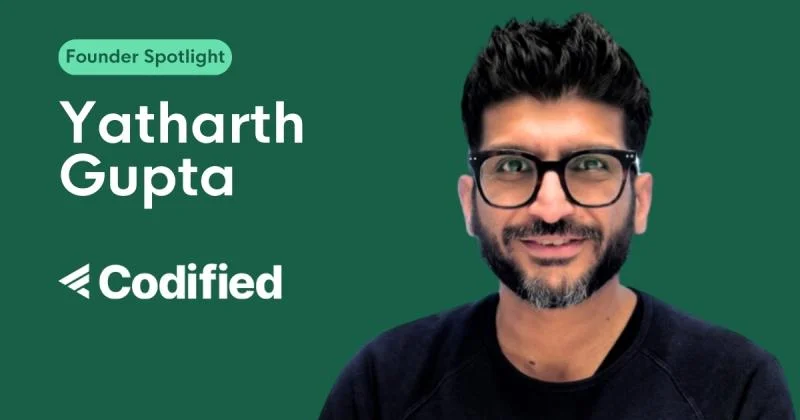
    Codified, a Seattle startup that helps companies control who can access their data in AI-driven systems, is “winding down” according to the founder and former CEO.

    Yatharth Gupta shared the update with GeekWire, but declined to provide any further details.

    Gupta recently started a new position as a director of product management at Google in Kirkland, Wash.

    “New beginnings! & also I’m hiring!” he wrote in a post on LinkedIn last week.

    Founded in 2023 after being incubated at Madrona Venture Labs, Codified raised a $4 million seed round in February 2024 led by Madrona Venture Group and Vine Ventures, with participation from Soma Capital. Former Snowflake CEO Bob Muglia also invested in the startup, along with SAP exec and former Microsoft VP JG Chirapurath, and Shireesh Thota, vice president of databases at Microsoft.

    Codified is described as an end-to-end data governance operating system. It uses generative AI to let users create data access rules by simply writing the policies in plain English.

    The idea is to help companies speed up and improve how they decide who has access to what data, for what reason, and for how long.

    Gupta spent more than 14 years at Microsoft, where he helped lead Azure-related data access and management projects. More recently he was a senior vice president of product management at enterprise database company SingleStore.

    Other execs at Codified included Stefan Batres, former director of engineering at Tableau Software, who is now at Atlan; and Karan Thakker, former senior software engineer at ExtraHop and Alation, who is now back at ExtraHop.

    Track all of GeekWire’s in-depth startup coverage: Sign up for the weekly startup email newsletter; check out the funding tracker and VC directory; and follow our startup news headlines.